





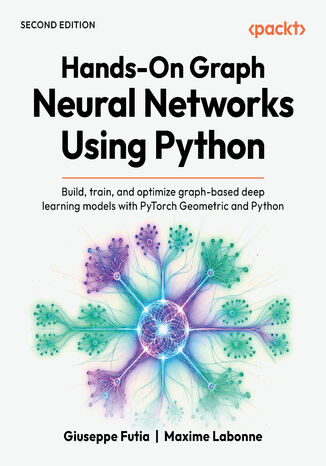
Hands-On Graph Neural Networks Using Python. Build, train, and optimize graph-based deep learning models with PyTorch Geometric and Python - Second Edition Giuseppe Futia, Maxime Labonne

- Autorzy:
- Giuseppe Futia, Maxime Labonne
- Wydawnictwo:
- Packt Publishing
- Ocena:
- Dostępny format:
-
ePub
Early Access

Uwaga! Ebook w usłudze Early Access – czytasz w trakcie pisania! Zyskujesz dostęp do najświeższej wiedzy na etapie tworzenia książki. Treść jest udostępniana stopniowo, rozdział po rozdziale, i może zawierać wersje robocze przed ostateczną redakcją. O każdej nowej aktualizacji powiadomimy Cię mailowo.
Planowany termin zakończenia prac to 2026-11-20. Termin ten ma charakter orientacyjny i może ulec zmianie w zależności od przebiegu procesu redakcyjnego, recenzji technicznych oraz tempa prac autorów.
Opis
książki
:
Hands-On Graph Neural Networks Using Python. Build, train, and optimize graph-based deep learning models with PyTorch Geometric and Python - Second Edition
The book begins with graph theory fundamentals and data manipulation using NetworkX and PyTorch Geometric. You then explore shallow embedding methods—DeepWalk and Node2Vec—before progressing to core GNN architectures: Graph Convolutional Networks, Graph Attention Networks, and GraphSAGE.
This edition introduces several new chapters reflecting the latest advances: Graph Transformers, integration of graph databases with GNNs, the convergence of LLMs and GNNs through GraphRAG, and the emerging paradigm of Graph Foundation Models. Existing chapters on expressiveness, link prediction, heterogeneous graphs, temporal GNNs, and explainability have been updated with current best practices.
The final part puts theory into practice with end-to-end projects: traffic forecasting with A3T-GCN, anomaly detection with heterogeneous GNNs, and building a recommender system with LightGCN.
By the end of this book, you will have the knowledge and practical skills to apply GNNs to your own graph-structured data problems.
Wybrane bestsellery
-
 Sztuczna inteligencja przestała być futurystyczną wizją to narzędzie, które już dziś zmienia codzienną pracę specjalistów IT. ChatGPT, Claude i inne modele AI rewolucjonizują sposób, w jaki programiści piszą kod, administratorzy zarządzają systemami, a menedżerowie prowadzą zespoły. Książka stanowi praktyczny przewodnik po zastosowaniu sztucznej inteligencji w realnych scenariuszach od automatyzacji rutynowych zadań po rozwiązywanie złożonych zagadnień technicznych. To pozycja dla każdego, kto chce nie tylko nadążyć za zmianami, ale też uczynić z AI przewagę konkurencyjną w swojej karierze.
-
książka
-
ebook
(77,40 zł najniższa cena z 30 dni)
82.56 zł
129.00 zł (-36%) -
-
 Systemy oparte na agentach AI rewolucjonizują sposób, w jaki organizacje rozwiązują złożone problemy biznesowe. Generatywna sztuczna inteligencja przyspiesza drogę od koncepcji przez prototyp aż do gotowego rozwiązania, a agenty AI łączące narzędzia, wiedzę, pamięć i uczenie się z zaawansowanymi modelami podstawowymi umożliwiają sekwencyjne wywoływanie modeli do realizacji niejednoznacznych zadań. Od agentów-koderów, przez agentów-badaczy, po agentów-analityków wszędzie widać, że mogą one znacząco przyspieszyć pracę zespołów. Jednak ich wdrożenie pozostaje wyzwaniem wymagającym intensywnego planowania.
-
książka
-
ebook
(49,50 zł najniższa cena z 30 dni)
63.36 zł
99.00 zł (-36%) -
-
 Książka stanowi kompleksowy przewodnik po projektowaniu wspomaganym sztuczną inteligencją, od podstaw inżynierii promptów po zaawansowane techniki współpracy z modelami AI. Autor szczegółowo omawia narzędzia takie jak GitHub Copilot, Cursor, Windsurf czy Claude, pokazując, jak je skutecznie integrować z codziennym przepływem pracy. Szczególny nacisk kładzie na problem 70% zjawisko, w którym AI doskonale radzi sobie z rutynowymi zadaniami, ale ostatnie 30% wymaga ludzkiej ekspertyzy w zakresie architektury, bezpieczeństwa i optymalizacji.
-
książka
-
ebook
(53,40 zł najniższa cena z 30 dni)
56.96 zł
89.00 zł (-36%) -
-
 Autorzy prowadzą czytelnika przez kompletny proces od wyboru odpowiedniego modelu bazowego, przez przygotowanie danych treningowych i techniki dostrajania, aż po wdrożenie w klastrze Kubernetes. Prezentują przy tym trzy praktyczne projekty: budowę własnego modelu LLM od podstaw, stworzenie rozszerzenia AI dla VS Code i wdrożenie modelu na Raspberry Pi. Szczególny nacisk kładą na aspekty produkcyjne zarządzanie kosztami, bezpieczeństwo, skalowanie i monitorowanie systemów opartych na LLM.
-
książka
-
ebook
(89,40 zł najniższa cena z 30 dni)
95.36 zł
149.00 zł (-36%) -
-
 Dlatego powstał ten praktyczny przewodnik dla inżynierów oprogramowania, którzy chcą mądrze korzystać z generatywnej sztucznej inteligencji. Zawiera porównania narzędzi, praktyczne wskazówki ułatwiające pracę i studia przypadku z rzeczywistego świata. Każdy rozdział obejmuje krytyczną ocenę narzędzi: ich możliwości, zastosowań i ograniczeń. Książka wykracza jednak poza recenzje, oferując jasno zdefiniowany schemat oceny narzędzi i procesów, które aktualnie zmieniają oblicze programowania. Dzięki niej odnajdziesz się w dynamicznym świecie technologii i świadomie podejmiesz trafne decyzje projektowe.
-
książka
-
ebook
(41,40 zł najniższa cena z 30 dni)
44.16 zł
69.00 zł (-36%) -
-
 Rewolucja wywołana w listopadzie 2022 roku wraz z pojawieniem się ChatGPT zapoczątkowała nową erę w marketingu cyfrowym. Generatywna sztuczna inteligencja błyskawicznie stała się jednym z najgorętszych tematów w branży IT, a firmy na całym świecie intensywnie poszukują sposobów jej zastosowania. Dla specjalistów SEO oznacza to fundamentalną zmianę w sposobie pracy od badania słów kluczowych, przez tworzenie treści, aż po analizę konkurencji. Jednocześnie pojawia się pytanie: jak wykorzystać potencjał AI, a przy tym uniknąć jej pułapek? Odpowiedzi podsuwa ta książka, będąca praktycznym przewodnikiem po świecie SEO wspomaganym sztuczną inteligencją.
-
książka
-
ebook
(47,40 zł najniższa cena z 30 dni)
50.56 zł
79.00 zł (-36%) -
-
 Rewolucja AI, której jesteśmy świadkami, najprawdopodobniej odmieni nasz świat. Wpłynie także a może przede wszystkim na pracę. Pewne zawody znikną, inne znacznie się zmienią, pojawią się też zupełnie nowe stanowiska. Już dziś szeroko dyskutuje się na przykład o tym, że sztuczna inteligencja odbierze zajęcie marketerom. Czy naprawdę jest się czego bać? A może zamiast obawiać się rozwoju technologicznego, warto mu się przyjrzeć bliżej, poznać go i nauczyć się korzystać z nowych narzędzi po to, by wykonywać swoje zadania łatwiej, szybciej i skuteczniej?
-
książka
-
ebook
(40,20 zł najniższa cena z 30 dni)
42.88 zł
67.00 zł (-36%) -
-
 Chcesz tworzyć produkty cyfrowe szybciej niż kiedykolwiek i zarabiać na własnych aplikacjach, wtyczkach lub grach? Vibe coding. Kurs video. Twórz i sprzedawaj produkty cyfrowe z AI pokaże Ci, jak dzięki AI przejść od pomysłu do działającego produktu w rekordowym czasie. Nauczysz się vibe codingu nowoczesnego podejścia do tworzenia narzędzi cyfrowych, łączącego kreatywność z technologią i automatyzacją AI. Wiedza, którą zdobędziesz, jest dziś wyjątkowo pożądana w startupach, grach i aplikacjach mobilnych, co pozwoli Ci się wyróżnić na rynku pracy i freelancingu.
-
kurs
-
-
 Ten podręcznik na nowo definiuje rolę lidera do spraw sztucznej inteligencji w środowisku, w którym używa się predykcyjnej, deterministycznej, generatywnej i agentowej AI do rozwiązywania złożonych problemów i wspierania innowacyjności. Autor przedstawia strategie realizacji transformacyjnych inicjatyw z obszaru AI, budowania skutecznych zespołów i zarządzania nimi. Dużo miejsca poświęca odpowiedzialnemu wdrażaniu AI i zachowaniu zgodności z regulacjami. Książka spełnia rolę mapy drogowej od projektowania przełomowych rozwiązań po osiąganie wymiernych rezultatów biznesowych.
-
książka
-
ebook
(53,40 zł najniższa cena z 30 dni)
56.96 zł
89.00 zł (-36%) -
-
 Strona internetowa to dziś centralny punkt, w którym klient podejmuje decyzję zakupową. Dzięki dobrze zaprojektowanej witrynie marka zyskuje wiarygodność, a użytkownik szybko znajduje potrzebne informacje. Za sprawą AI proces tworzenia stron jest prostszy niż kiedykolwiek, zniknęły bowiem typowe problemy, takie jak syndrom czystej kartki. Wystarczy jedno zdanie, by sztuczna inteligencja wygenerowała szkielet strony, który później dopracujesz według własnego pomysłu.
-
kurs
-


 Wybrane elementy graficzne tej sekcji powstały przy wsparciu AI
Giuseppe Futia, Maxime Labonne - pozostałe książki
-
 This definitive playbook is written by a team of industry leaders and domain experts, it equips professionals, graduates with the mindset, skills, and strategies needed to succeed, pivot, and lead in a world transformed by intelligent systems.
-

-
ebook
(65,05 zł najniższa cena z 30 dni)
125.10 zł
139.00 zł (-10%) -
-
 Hands-On Graph Neural Networks Using Python is a comprehensive guide to building and training graph neural networks for a variety of real-world applications. With clear explanations and plenty of hands-on examples, this book is a valuable resource for anyone looking to learn about and apply graph neural networks to their own projects.
-
-
ebook
(65,05 zł najniższa cena z 30 dni)
125.10 zł
139.00 zł (-10%) -
-
 Ten obszerny przewodnik pokaże Ci, jak stosować najlepsze praktyki w pracy z LLM. Znajdziesz tu omówienie kluczowych koncepcji, praktyczne techniki i porady ekspertów z zakresu inżynierii danych, dostrajania i oceny modeli, optymalizacji wnioskowania, a także budowania skalowalnych potoków przetwarzania. Krok po kroku prześledzisz, jak zrealizować konkretny produkt, integrując różne aspekty inżynierii LLM i metodologię MLOps. Dowiesz się, jak zbierać i przygotowywać dane, dostrajać modele do specyficznych zastosowań, zwiększać ich wydajność i wdrażać rozwiązania oparte na technice RAG.
-
książka
-
ebook
(71,40 zł najniższa cena z 30 dni)
76.16 zł
119.00 zł (-36%) -
-
 LLM Engineering offers a detailed roadmap for building, training, and deploying Large Language Models, complete with practical examples and advanced techniques, making it an essential guide for modern AI professionals
-
-
ebook
(93,12 zł najniższa cena z 30 dni)
188.10 zł
209.00 zł (-10%) -




Szczegóły książki
- Tytuł oryginału:
- Hands-On Graph Neural Networks Using Python. Build, train, and optimize graph-based deep learning models with PyTorch Geometric and Python - Second Edition
- ISBN Ebooka:
- 978-18-063-8270-5, 9781806382705
- Data wydania ebooka :
-
2026-11-20
 Data wydania ebooka często jest dniem wprowadzenia tytułu do sprzedaży i może nie być równoznaczna
z datą wydania książki papierowej. Dodatkowe informacje możesz znaleźć w darmowym fragmencie.
Jeśli masz wątpliwości skontaktuj się z nami sklep@helion.pl.
Data wydania ebooka często jest dniem wprowadzenia tytułu do sprzedaży i może nie być równoznaczna
z datą wydania książki papierowej. Dodatkowe informacje możesz znaleźć w darmowym fragmencie.
Jeśli masz wątpliwości skontaktuj się z nami sklep@helion.pl.
- Język publikacji:
- angielski
- Rozmiar pliku ePub:
- 3.7MB
- Zgłoś erratę
- Kategorie:
Dane » Analiza i wizualizacja danych » Python w danych
Dane » Data science » Deep Learning
Dane » Data science » PyTorch
Packt Publishing - inne książki
-
 Proxmox is an open source server virtualization solution that has enterprise-class features to manage virtual machines, to be used for storage, and to virtualize both Linux and Windows application workloads. This book will help you become an expert in effectively building virtual environments with Proxmox and also help you tackle the day-to-day challenges faced while managing Proxmox clusters.
-
-
ebook
(60,36 zł najniższa cena z 30 dni)
116.10 zł
129.00 zł (-10%) -
-
 Properly responding to an incident can mean the difference between a short or a catastrophic outage. In this book, cyber threat responders will be shown the tools, techniques and procedures necessary for an effective threat response.
-
-
ebook
(69,73 zł najniższa cena z 30 dni)
143.10 zł
159.00 zł (-10%) -
-
 The fourth edition of Microsoft Power BI Quick Start Guide helps you master data visualization and insights with ease, no experience needed. Learn Power BI fast and turn raw data into impactful decisions with hands-on, real-world examples.
-
-
ebook
(65,05 zł najniższa cena z 30 dni)
125.10 zł
139.00 zł (-10%) -
-
 Master the realm of Cyber Threat Intelligence and Proactive Threat Hunting with 'Practical Threat Intelligence and Data-Driven Threat Hunting, 2nd edition'. This is your essential guide in the ever-evolving landscape of cyber threats.
-
-
ebook
(60,36 zł najniższa cena z 30 dni)
116.10 zł
129.00 zł (-10%) -
-
 This latest edition of Practical Hardware Pentesting features even more practical advice on how to pentest various devices, from IoT to simpler hardware. As you progress through the chapters, you'll quickly learn the most common attack techniques, as well as ways to secure embedded systems and build more secure devices.
-
-
ebook
(65,05 zł najniższa cena z 30 dni)
125.10 zł
139.00 zł (-10%) -
Dzięki opcji "Druk na żądanie" do sprzedaży wracają tytuły Grupy Helion, które cieszyły sie dużym zainteresowaniem, a których nakład został wyprzedany.
Dla naszych Czytelników wydrukowaliśmy dodatkową pulę egzemplarzy w technice druku cyfrowego.
Co powinieneś wiedzieć o usłudze "Druk na żądanie":
- usługa obejmuje tylko widoczną poniżej listę tytułów, którą na bieżąco aktualizujemy;
- cena książki może być wyższa od początkowej ceny detalicznej, co jest spowodowane kosztami druku cyfrowego (wyższymi niż koszty tradycyjnego druku offsetowego). Obowiązująca cena jest zawsze podawana na stronie WWW książki;
- zawartość książki wraz z dodatkami (płyta CD, DVD) odpowiada jej pierwotnemu wydaniu i jest w pełni komplementarna;
- usługa nie obejmuje książek w kolorze.
Masz pytanie o konkretny tytuł? Napisz do nas: sklep@helion.pl
Książka drukowana


Oceny i opinie klientów: Hands-On Graph Neural Networks Using Python. Build, train, and optimize graph-based deep learning models with PyTorch Geometric and Python - Second Edition Giuseppe Futia, Maxime Labonne
(0)